Category: Plantasia

  • Plantasia Full Release: Bedroom Decor, Seed Shuffler, Store and Database, and Gene Traits

    Hey there! Thank you for playing our cozy game! The release of Plantasia 1.0 is a moment filled with emotion and gratitude to both our mentors and all of you, the people who made this game happen. It’s extremely rewarding to see what we have achieved as an all-volunteer team for our first released game.


    The Full Release includes several new and exciting features: decorate your bedroom, buy and shuffle seeds, have an overview of your seed database, along with several improvements to the existing version.

    Check out the full release notes below!

    Full Release Overview

    • Decorate your bedroom with craftable decor available in 4 color schemes
    • Discover new seeds using the Seed Shuffler
    • Purchase more of the already discovered seeds in the Seed Store
    • Keep track of your discovered plant families, species, and colors in the Seed Database
    • Grow plants faster with newly added Affixes – gene traits that are more frequently encountered during the growth phase
    • Discover new Quests to get used to the game’s mechanics
    • Filter and sort through your Inventory for easier seed selection
    • And more improvements to already existing features

    MAC BUILD COMING VERY SOON

    Full Soundtrack now available for purchase through Steam!

    ALERT:


    It is highly recommended that all players clear their existing Save Data after updating the game to 1.0. If you choose to not clear your Save Data you may experience bugs the developers did not intend. We understand that you may have put a lot of hours and work into the game and may not want to delete that progress, but we strongly believe your experience will be much improved by starting fresh. We are unlikely to be able to fix bugs that occur due to uncleared data.

    Decorate Your Bedroom

    A new room has been added to the Greenhouse! Relax in style in your new and completely customizable Bedroom.

    Unlock decor in your bedroom by crafting. Use the resources you collect while growing plants and create a cozy bedroom in different color schemes.

    Decor can be crafted using the Crafting Table. Each crafting recipe shows what kind of resources you still need and what you have in your inventory. 

    A screenshot of the crafting table in our cozy game
    A screenshot of the decor crafting menu

    Seed Bank: Complete your Seed Database

    The Seed Bank is now open for use! One of the functionalities you can use with this addition is the Seed Database. Here, you can see which plants you have discovered, which plants are unknown, and details about the plant species and gene traits.

    A screenshot of the seed database in our indie game
    A screenshot of the seed database for plant species in our indie game

    Seed Bank: Purchase Seeds in the Seed Store

    The second tab in the Seed Bank is a Seed Store. Use the newly added currency to buy seeds of a specific species that you have already unlocked. Undiscovered seeds aren’t available for purchase.

    Seed Bank: The Seed Shuffler

    The seed shuffler is a scientific device that shuffles seed DNA to create new types of seeds. Use in game currency to power the device and if you are lucky you may unlock never before discovered seeds. The shuffler is also great for discovering new or improved Gene Traits.

    Gene Traits

    Plants now have Gene Traits – traits that change many aspects of the seeds growth, output or needs. You can view all Gene Traits in the Seed Database. Cross-breeding plants will also take Gene Traits into account. Gene Traits are a high level mechanic, and intended for players who want to deeply customize their growing experience. Casual players do not need to interact with this system in order to achieve their goals.

    Revamped Tutorials 

    Almost all tutorials have been reworked and put into an all-new quest format. Come along as B.E.A.R. teaches you the ins and outs of GARDEN Station systems with the help of the other REVIVE representatives. All Quests are “play at your own pace” and must be triggered by the player. This allows players to move through the story as slowly or quickly as they would like.

    A screenshot of the affix database
    A screenshot of the plant cross breeding menu in our semi-idle game

    Filter and Sort Seeds in Your Inventory

    Looking for specific plants to grow? Use the newly added filters and sorting options! Sorting allows you to see seeds you currently own based on when they were discovered, alphabetically, by gene traits, tiers, colors and types. Multiple filters can be selected for a plant’s base, bloom, color or gene trait. Once you have selected all your desired traits, apply your selection and click on the window title again to close it.

    A screenshot of the newly added inventory filters and sorting options for your plant seeds

    Complete Requests and Earn Resources

    Requests from REVIVE have been moved to the top right corner. Click on the clipboard icon to see your active requests, then click on the request you’d like to complete and select the seeds you wish. Now that the Seed Store exists, Requests will no longer award seeds upon completion.

    A screenshot of the new REVIVE request placement

    On the future of Plantasia

    First and foremost, Cave Bear Games is an all-volunteer studio by and for juniors looking to break into the game dev industry (and some of us now have!).

    But what does that have to do with Plantasia?

    Well, it means that a lot of the team will be focused on following the studio’s main goal: providing a space for junior devs and designers to flex their muscles and hone their craft. Plantasia is, for all purposes, a complete and released game now.

    Does that mean Plantasia won’t receive any more updates?

    Not necessarily. However, due to the nature of volunteer projects, any following updates will likely be minor bug fixes from the members who have the time to do so.

    We want to thank everyone who supported us and believed in us throughout Plantasia’s development, and all the people who made this possible. A big thank you as well to all the mentors who were by our team’s side and all our playtesters who made the game better. 

    And finally, a thank you to you for playing our game and giving us a chance. We hope that this game helps you escape the chaos of daily life and provides a cozy respite, if only for a moment.

    – The Cave Bear Team
  • Struggling to focus on your work or studies? Me too. Check out this cozy idle game that sits at the bottom of your screen and avoid the temptation of doom-scrolling.

    Life is busy and games are a timesuck. Game companies are fighting for gamers’ attention, with work, childcare, relationships, and other games as our competitors in the ring. How can we convince players to put all this aside, just to progress through our game?

    The answer is idle games. This genre has been around for many years and not just on mobile. I remember playing Plant Tycoon (2003) as a child and the most rewarding part was discovering never before seen plants that had matured on their own while I was at school. This is where idle games excel—and this could be the reason why they blew up in recent years. Even if you’re not actively playing, you’re still progressing in the background and get to do so at your own pace.

    However, while idle games have relatively simple mechanics, they have to be properly paced to actually be enjoyable. Remember Cookie Clicker (2013)? The only player input was a simple click. Plant Tycoon was fun because there was a bigger goal at stake: solving the mystery of Isola. Sure, selling plants and buying decorations was fun too, but my main reason for playing was discovering these legendary plants that would reveal Isola’s history. But this could not be done in a day or two of grinding. A good idle game knows how to pace itself while ultimately being rewarding no matter how much time the player invests. After all, it is called idle. 

    Now, in the modern age of gaming, imagine having the game on the bottom third of your computer screen. This exists as a new innovation, pioneered by Rusty’s Retirement (2024). It’s always there for you to see, but creates room for life’s more important ventures – like scrolling Game Developer articles. It still requires time to progress, while allowing the player space to do other things, giving it a new function as a focus tool. When you need a break or want to set a timer, you can go to the bottom of your screen and play, effectively eliminating other distractions like phones and other websites. 

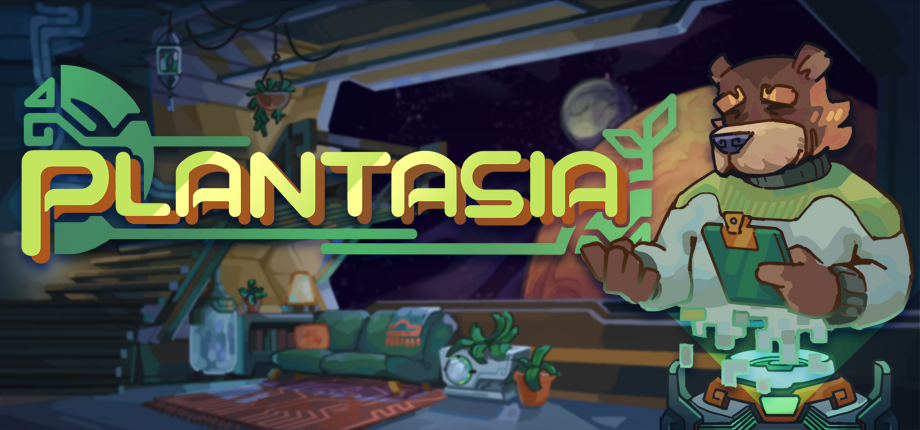
    This is the idea behind Plantasia—an upcoming game where you take the role of a botanist tasked to revive planetary life. In Plantasia you have access to several rooms in an orbital greenhouse lab to grow plants and breed new species that will revitalise barren planets. 

    The team behind this solarpunk and mesoamerican themed game is Cave Bear Games made entirely of junior volunteers. Discover how Plantasia was created from Ayla Derrick, the studio’s founder and Creative Director in the interview below. 

    Tell us a bit about yourself and the idea behind Plantasia.

    Sure! I started out in education and when I decided to leave my job in the field, I figured I could go back to something I always loved. After applying to a lot of jobs in game dev and not getting many responses back, I decided to make my own game. I connected with a lot of mentors over LinkedIn and along the way I formed the studio. Like me, the team is made out of junior volunteers that also want to build a portfolio through this project. We also have revshare in case the game brings in the big bucks.

    Plantasia is inspired by games like Rusty’s Retirement (2024) and Plant Tycoon (2003). It’s placed in the bottom third of your screen and you can have it there while you’re working or studying. If you need a minute to take a break, you can go to Plantasia instead of getting stuck scrolling through reels. As for the narrative, the player takes the role of a botanist aiming to revitalise barren planets from their orbital greenhouse lab. The player looks out into the lab as the plants grow and they interact through dragging and clicking.

    In your opinion, what makes Plantasia stand out from the other idle games in the market?

    While we are an idle game, we put a lot of effort and thought into the story, combining idle with cozy systems like relationship building so you can form relationships with Plantasia’s NPCs. 

    Another focus for us was the overall atmosphere of the game along with customization options. With the game’s official release, players have the option to craft decorations for their room as they gather resources. The game’s soundtrack was created to promote focus as well, with all the elements building into a cozy focus-oriented environment instead of a tool.

    As you know, a good progression system is a must for idle games to work. Without giving away too much, how does this look for Plantasia?

    There are several parts to our progression system. First, players unlock new plants by breeding plants and getting new seeds. Story points are unlocked by playing and come naturally, so players aren’t forced to farm currency or grind in order to discover more. And, if you’re not a story-oriented person, you can still play the game without being forced into the story.

    It’s up to each player how much time they put into Plantasia. The main part about progression is that the game cannot be grinded all at once. It takes real-time for the plants to grow.

    What kind of rewards will the player get as they progress and how do they use them?

    The first reward players get is access to additional plant types and seeds. These seeds can be combined to unlock more unique plants as you play. With the official release, we also included decor for the player to customize their bedroom. Plantasia also has “currency” in the form of building materials and plants that can be used to craft more resources, decor, and find new plants.

    What platforms are you targeting?

    Plantasia is intended for desktops as the game’s core feature is being able to play while it sits on the third bottom of your screen and avoid doomscrolling on mobile. The game is meant to be played on the same device you are working or studying on so you cannot close the game and get distracted with social media.

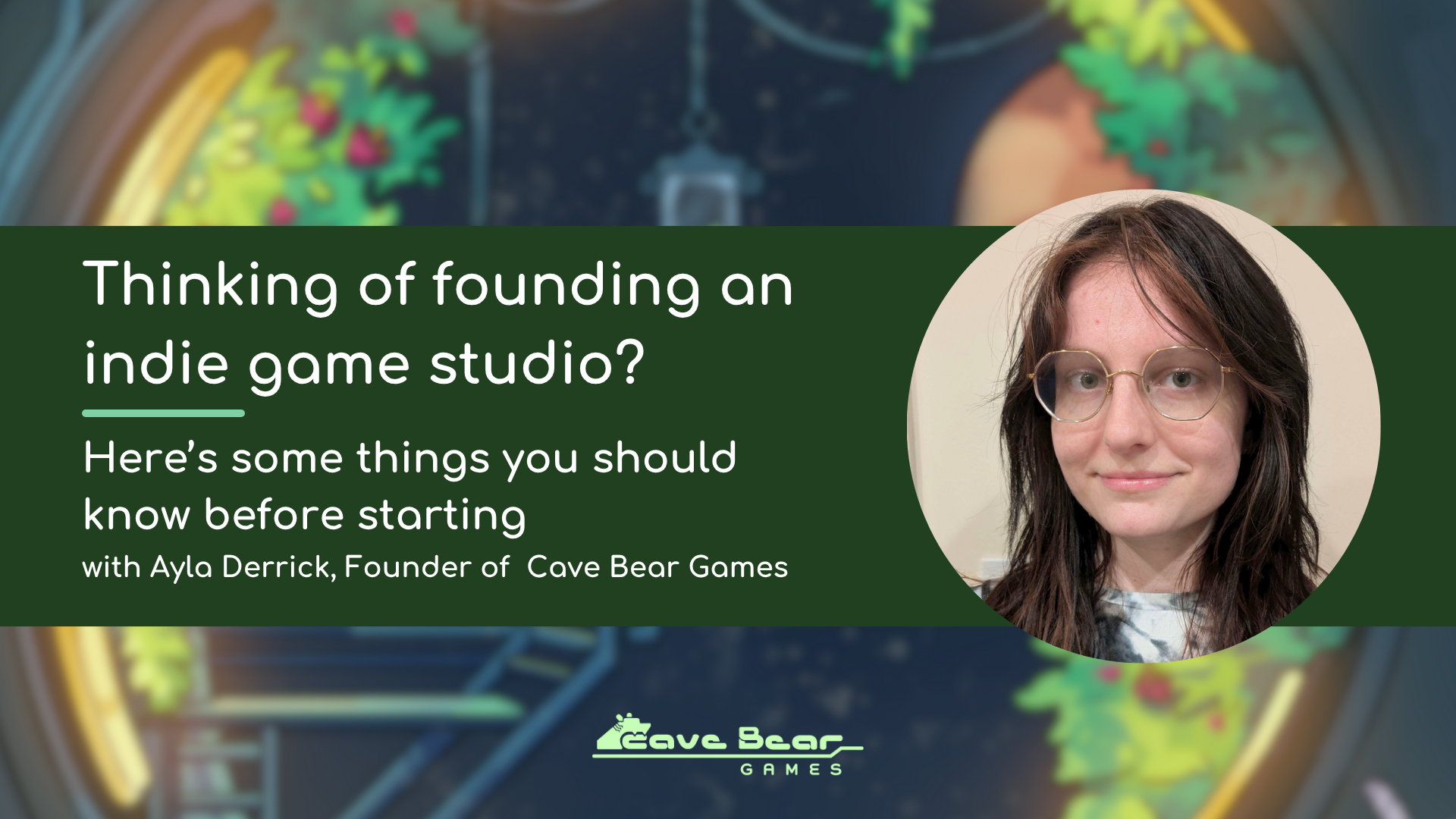
  • Get insight into starting an indie game studio and the challenges that come with it in this interview with Ayla Derrick, the founder of Cave Bear Games.

    Let’s face it: the game industry is hard. With the recent layoffs this year and the increased difficulty of finding a job in the industry, it’s easy to lose hope especially if you’re at the beginning of your career. Everyone seeks candidates with experience when a lot of people don’t even get the chance to work on a project. 

    If you’re in the same boat, you might have thought of another solution: founding an indie game dev studio. While it might not be the ideal solution, it is a way to learn, gain experience, and work together with a team to create a game or several. And with some luck, you might even gain funding in the process. However, there’s a lot of work that goes into founding, growing, and maintaining your studio. You have to manage multiple teams, talk with other industry professionals to network, find mentors, look for investors, work on the game—all while constantly learning. It can get exhausting very fast.

    The good news is there are more and more resources for indie game studios ranging from online communities that support each other, to mentorships and insightful materials about what it takes to make games. 

    Meet Ayla Derrick, the founder of Cave Bear Games leading a team that’s made entirely of junior volunteers. In this article, Ayla shares more about her experience and struggles of founding an indie studio, developing a game, and key points to keep in mind when starting your own.

    Let’s start with an introduction to you and your work. What was your background like before shifting to the game industry, and how did you come to the decision of founding a studio?

    I began my journey in education, but when I decided to switch my career direction, I knew it was time to pursue a lifelong passion: creating games. I started with a lot of applications to game dev positions but I wasn’t successful. That’s when I thought of creating my own studio and putting together a team with the same struggles and passions so we can grow together. Along the way, I connected with amazing mentors on LinkedIn, and that’s how my studio came to life. Our team is made up of passionate junior developers, just like me, all excited to build their portfolios through this project. And who knows—if the game takes off, we’ve got a revshare plan to celebrate the success together!

    Since you’re developing your first game, you know the struggle to break into the industry, so we’ll have a few questions around that. What’s one piece of advice you’d give to someone thinking about founding their own studio?

    The biggest help was from networking. I managed to connect with mentors and professionals all over and I really appreciate all their support so far. It’s hard getting into the industry, especially more so as a junior, but the community is always willing to help and that’s what I find amazing. So my advice is go and try networking, be it online or offline. You’re bound to meet great people to give you hands-on advice or even collaborate with you. 

    Our Discord community has a section dedicated to that since we have a lot of people starting out. We have a networking channel and we partner with other volunteer-led studios to offer volunteering/revshare opportunities. At the moment we have 50+ partner studios with more to come. 

    What resources did you use the most to found and run your studio?

    I’d say all the help from our mentors. I make it a priority to find mentors for every team member since we’re all juniors and as someone with a background in education I’m huge on learning and improving. The team has amazing ideas but everyone needs a bit of polish and that’s the part the mentors play. It’s incredible how everyone in the game industry is extremely welcoming and willing to help, and that’s been a huge part of running the studio.

    Let’s talk about some of the challenges you’ve faced as a newly-founded indie studio. What would you say are the biggest so far and what do you recommend to new studios?

    One of them would be the lack of knowledge since we’re all juniors and we’re learning. This was especially challenging during pre-production as we didn’t have any documentation to guide ourselves by. 

    Our mentors helped us along the way, however, we only really understood what it means once we got through it and realised we did a lot of things wrong. We’re dealing with the consequences of that right now and it’s slowing things down.

    My advice to avoid this challenge is to take your time during pre-production. Have a meeting with everyone involved, talk about what you all want in the game, and start your documentation. Don’t create content before designing and creating system plans.

    As for the team structure, everyone has different ideas of which departments matter the most. But at the very least you need a designer, programmer, marketer and QA lead. You might think that all departments need to be involved in every step of the development, but it’s not always feasible. Try to identify that during pre-production so you have a clear plan moving forward. I personally highly recommend a Producer at the start as well.

    What would you say is your focus when creating games?

    My main focus is the experience we gain as a team and the actual physical experience of creating a game. We’re all juniors so that’s what we’re looking for. The game itself is less of a focus but it’s something that keeps us together. Everyone’s passionate and interested in the game, so aside from gaining hands-on experience, we’re also driven by our love for Plantasia.

    A common struggle is finding a good name for a studio and honestly I find yours amazing. A lot of people love seeing bears on your social media too. The bear craze is real. So what’s the story behind the name Cave Bear Games?

    It’s actually related to my name. Ayla is not the most common name you might have encountered and it’s actually from a book called The Clan of the Cave Bear. It’s a fantastic book about a human girl named Ayla who gets adopted by a neanderthal tribe in ancient cavemen times. It follows her as she grows up defying stereotypes and patriarchal ideas. So obviously as a fellow woman I resonate with that. I also like my name a lot and so Cave Bear Games came pretty naturally.